Encryption Protocols and Their Influence on Equitable Prize Allocation in Worldwide Digital Chance Platforms
Greta Simon · Oct 18, 2026
Encryption Protocols and Their Influence on Equitable Prize Allocation in Worldwide Digital Chance Platforms
Data from regulatory bodies shows that encryption protocols serve as foundational elements in maintaining prize distribution integrity across digital chance applications operating in multiple jurisdictions, and researchers at institutions like the National Institute of Standards and Technology have documented how standards such as AES-256 and RSA-2048 prevent unauthorized access to random number generation sequences that determine outcomes.
Core Mechanisms Behind Secure Prize Systems
Encryption works by converting sensitive data into unreadable formats during transmission and storage, which means that prize allocation algorithms remain protected from external interference while users interact with platforms in real time, and this process relies on public key infrastructure to authenticate both the platform and the participant before any funds or rewards transfer occurs.
Studies indicate that protocols like TLS 1.3 have reduced vulnerability windows in cross-border transactions, allowing systems to verify RNG outputs without exposing the underlying seed values that control prize frequencies, while organizations in the European Union and Canada have implemented mandatory encryption audits to confirm compliance with these technical requirements.
International Regulatory Frameworks and Technical Standards
Observers note that different regions enforce distinct encryption mandates that directly affect how prizes reach winners, for instance Australia’s regulatory approach emphasizes end-to-end encryption for all user data flows related to chance-based rewards, whereas certain Asian markets require integration with national cryptographic modules to ensure that distribution logs cannot be altered post-generation.
According to reports compiled in October 2026, updates to global standards have aligned several protocols more closely with emerging quantum-resistant algorithms, which helps preserve fairness even as computational threats evolve, and this alignment has enabled platforms to maintain consistent prize equity across networks serving users in North America, Europe, and the Asia-Pacific region simultaneously.
Impact on Random Number Generation and Outcome Verification
Encryption safeguards the integrity of pseudorandom number generators by encrypting both the input seeds and the resulting sequences, which prevents any party from predicting or manipulating which participants receive specific prizes, and industry analyses reveal that platforms employing hardware security modules achieve measurable reductions in discrepancy rates during prize audits.
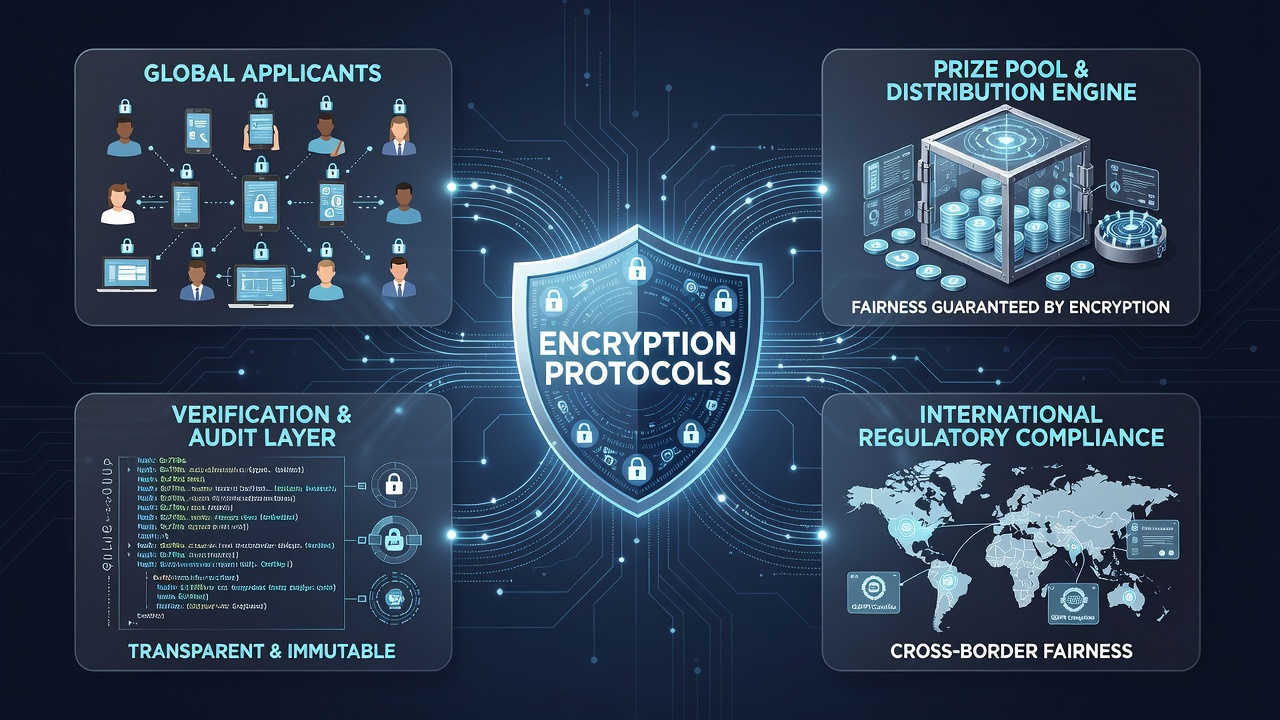
Those who examine verification processes find that hash chains combined with encrypted timestamps allow independent reviewers to reconstruct entire prize distribution events without exposing proprietary algorithms, and this capability has become particularly relevant in multiplayer environments where multiple jurisdictions claim oversight of the same application.
Transaction Security and Cross-Border Prize Delivery
Secure sockets layer successors ensure that financial details tied to prize claims travel through protected channels, reducing opportunities for interception that could otherwise compromise the fairness of who receives rewards, while data from academic sources shows that platforms using these layered protections experience fewer disputes over allocation accuracy.
Yet challenges persist when networks span regions with varying encryption strength requirements, since weaker local standards can create gaps that affect overall system trust, and experts have observed that harmonization efforts continue to address these inconsistencies through shared certification frameworks.
Conclusion
Encryption protocols continue to underpin fair prize distribution in international digital chance applications by protecting the technical components that generate and deliver outcomes, and ongoing developments in standards and regulatory coordination support consistent equity across diverse operational environments.